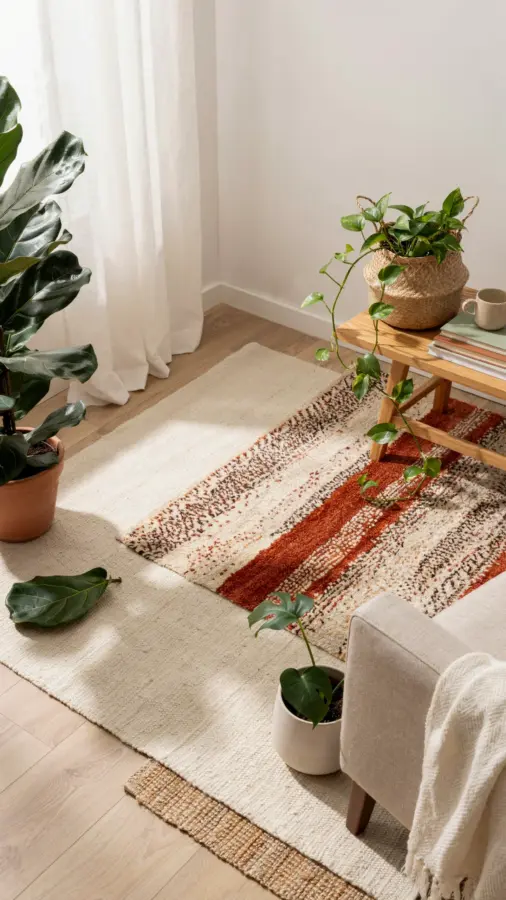
I never thought I would become a rug layerer. My living room always felt flat, like a stage with no props. Then I discovered layered rug styling and everything changed. One afternoon I pulled my old jute rug out of the closet, placed a smaller vintage kilim on top, and suddenly the room had warmth, depth, and a story. That moment turned into an obsession. Now I want to share what actually worked for me, especially if you are torn between boho and modern aesthetics. Layered rug styling is not complicated, but a few tricks make it look intentional instead of accidental.
Why a Neutral Jute Base Rug Works Every Time
I started with a cheap seagrass rug from a home improvement store. It was scratchy, beige, and honestly a little boring. But that boring base became the anchor. A neutral jute or sisal rug gives you a forgiving foundation that hides dirt and adds natural texture. It also costs less than a thick wool rug, which matters when you are layering multiple pieces.
- Choose a natural fiber rug in a light beige, tan, or gray. Avoid loud patterns on the bottom layer.
- Go large enough to cover the entire seating area. In my 12×15 foot living room, I use a 8×10 jute rug.
- Expect some shedding for the first few weeks. Vacuum regularly and it settles down.
The neutral base lets your top rug do the talking. It also protects the floor underneath, which is a bonus for renters who cannot replace scratched hardwood.
Boho Patterned Rug on Top for Instant Character
Once the jute was down, I added a 5×7 wool rug with a faded diamond pattern in terracotta and navy. That small boho rug defined the coffee table area and gave the room a focal point. The trick is to choose a top rug that contrasts with the base, both in color and texture. A flat weave kilim or a low-pile patterned rug works best because it sits flat on the jute without bunching. I tried a shaggy rug once and it slid everywhere. Keep it thin.
Patterned rugs hide pet hair and spills better than solid ones. My dog tracks in mud, and the busy design makes it less noticeable. That alone sold me on boho rug layering for life.
How to Define a Seating Area in an Open Floor Plan
Open concept living can feel like a gymnasium. Rugs are the only way to carve out a cozy zone without building walls. I live in a loft where the living room blends into the dining area. The layered rug setup creates an invisible boundary. I placed the jute so it extends slightly under the front legs of my sofa, then the top rug sits in the middle, anchoring the coffee table and armchair.
For open floor plans, your bottom rug should be large enough to include all major furniture legs. The top rug can be smaller, just enough to highlight the conversation area. Do not push the top rug against the wall. Leave at least six inches of the base rug visible on all sides. That gap makes the layering look intentional, not like an accident from a carpet sale.
Rug Layering Tricks for Rental Spaces
Renting means dealing with ugly carpet, laminate, or tile that you cannot change. I had beige wall-to-wall carpet in my last apartment, which made the whole room feel sterile. Layering a jute rug on top broke up the monotony and added the texture I craved. Then I topped it with a small modern geometric rug. It completely changed the feel without a security deposit risk.
If your rental has hardwood, a jute base can protect it from scratches and noise. Just use a rug pad underneath the bottom layer to prevent slipping. I use a thin felt pad cut to size. That sandwich of pad, jute, and pattern rug stays put even when I vacuum. Renters, do not be afraid to experiment. You can take the whole setup with you when you move.
Cozy Living Room Texture Through Layered Materials
Texture is the secret ingredient that makes a room feel warm. I learned this after staring at my flat, boring rug for months. By layering a smooth jute with a wool top rug, I added two distinct textures. Then I threw in a sheepskin throw on top of the top rug for even more softness. That little triangle of fleece near the sofa became my cat’s favorite nap spot.
Mixing materials also helps with acoustics. Jute and wool absorb sound better than synthetic rugs. In a small living room with hard floors, that makes a noticeable difference. The room feels quieter and more intimate. I recommend combining at least two different textures. For example, a flat woven cotton rug over a chunky wool base, or a vintage Persian over a sisal. Avoid synthetic shag on synthetic base. That looks cheap and pills quickly.
Practical Tips to Keep Layered Rugs from Slipping
Nothing ruins the boho look faster than a top rug sliding away mid-step. I tried double-sided tape and it worked for a week then left sticky residue. Finally I bought a non-slip rug pad specifically for under the top rug. The pad grips both the jute base and the bottom of the patterned rug. I also placed small rubber rug grippers along the corners of the top rug. They are invisible and hold tight even when I vacuum.
Another tip: choose a top rug that is roughly two-thirds the size of the bottom rug. If your base is 8×10, a 5×7 or 6×9 works well. If the top rug is too big, the edges curl. Too small, and it looks like a lonely island. Measure your furniture arrangement first. I made the mistake of buying a 4×6 for an 8×10 base and it looked like a postage stamp. Learn from my error.
Finding Your Own Balance Between Boho and Modern
Boho and modern sound like opposites, but they play nicely in the layered rug game. My living room leans modern with a low profile sofa and metal legs. The jute base keeps it grounded and natural. The patterned top rug adds the bohemian warmth. The result is eclectic without being cluttered. I avoid matching patterns. Instead I pick one rug with a bold design and keep the other simple. That prevents visual noise.
If you prefer a more modern look, choose a top rug with geometric shapes in muted colors like charcoal, cream, and blush. For boho, go for vibrant medallions or tribal prints. The layering technique itself is neutral. It works with any style. What matters is the contrast between the two rugs. Do not be afraid to swap them seasonally. In summer I use a lighter cotton rug on top, and in winter I swap in a thicker wool one. That simple change refreshes the whole room without buying new furniture.
Layered rug styling saved my living room from blandness. It gave me a way to express personality without committing to wallpaper or paint. If you are stuck with a floor that feels empty, try this trick. Start with a neutral base, add a smaller patterned rug, and watch the room transform. It took me one Saturday afternoon and less than two hundred dollars to get a look that friends always compliment. You can do the same. Go browse a rug store or thrift shop, pick two rugs that contrast, and lay them out. The cozy feeling is worth the effort.
#LayeredRugStyling #RugDecorIdeas #LivingRoomRugs #BohoRugLayering #CozyHomeTips
Leave a Comment